How to Keep a Garage Door From Freezing Shut in Winter
Table of Contents
To keep a garage door from freezing shut, keep snow and standing water away from the bottom seal, make sure the seal is clean and flexible, and lubricate the appropriate moving parts before winter. If the door is already stuck, stop using the opener and gently thaw the frozen area instead of forcing the door upward.
Before the first freeze: prepare the door and threshold
Before freezing weather arrives, inspect the door’s bottom seal and the floor directly beneath it, then remove dirt, leaves, and anything else that can hold moisture. A clean, intact seal is less likely to trap water against the concrete, where it can freeze and bond the door to the floor.
- Clear leaves, gravel, dirt, and other debris from the threshold and the strip of floor beneath the closed door. Debris can hold moisture against the seal and create a place for ice to form.
- Look along the full length of the bottom seal for tears, gaps, stiffness, or sections that have pulled away from the door. A damaged or inflexible seal may let water reach the threshold and can be harder to keep seated evenly.
- Check that the seal meets the floor along its length when the door is closed. If you can see an uneven gap, note where it appears; that location can help you distinguish a seal-contact problem from ice elsewhere on the door.
- Replace a worn bottom seal before freezing weather rather than waiting for a cold morning when the door is already sticking. Use a replacement intended for your door and follow the product and door instructions for fitting it.
- Inspect the side seals and threshold area for visible damage or gaps. Weatherstripping that no longer sits in place can allow wind and water to reach the door opening.
- Remove snow from the area immediately in front of the door and from the base after a snowfall. Meltwater can collect at the bottom edge and freeze against the seal.
- Keep the floor edge as dry as practical after wet weather or snowmelt. Drying the contact area reduces the water available to freeze between the seal and concrete.
- Look for water that repeatedly gathers near the door and clear the immediate area so it does not remain against the seal. If the same spot stays wet, address the source of the moisture rather than relying on lubricant to solve it.
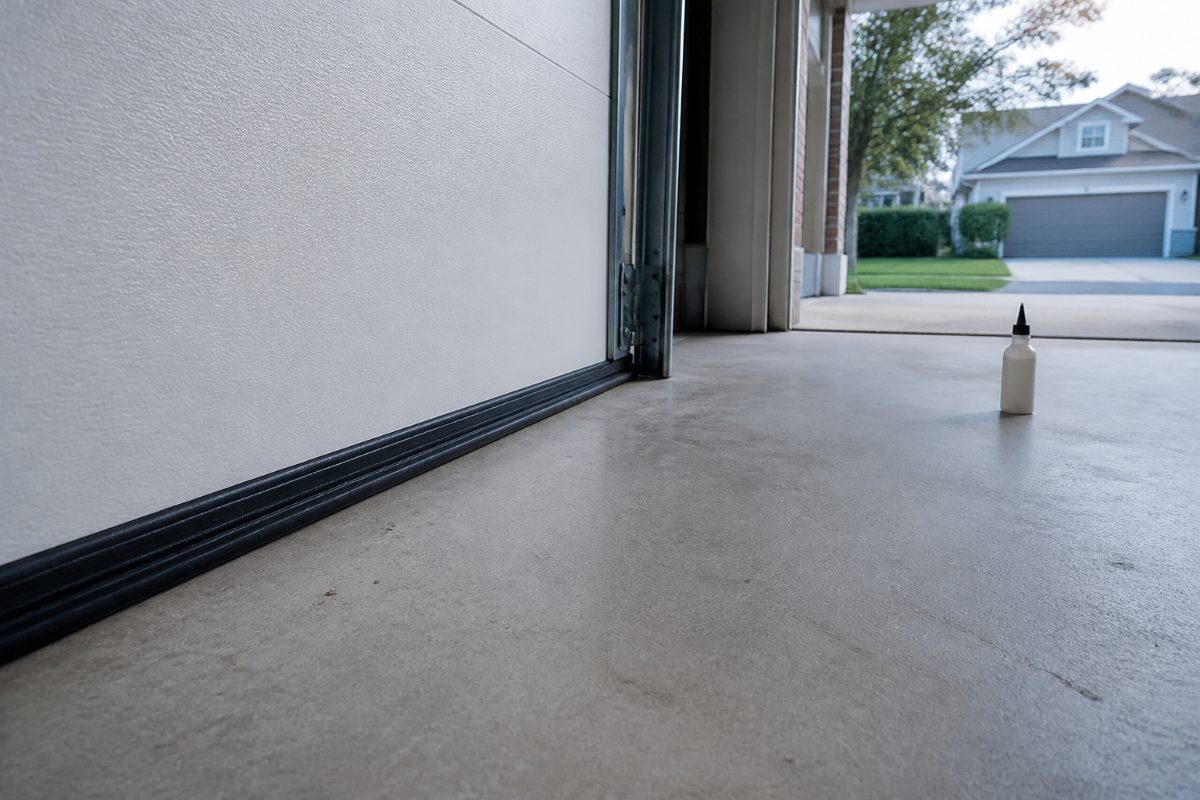
Winter garage door checklist: snow, seals, and moving parts
During winter, clear snow and ice from the door’s path and watch how the door moves during normal operation. A door that is attached to ice at the floor may resist movement at the bottom edge, while an opener that strains or reverses calls for stopping the cycle rather than trying again and again.
- After snow or freezing rain, clear the door’s path and the floor line beneath the door before operating it. This removes loose snow and ice that could block movement or melt into water at the seal.
- When you close the door, look at the bottom edge and check that the seal meets the floor rather than resting on a ridge of snow or ice. Snow left beneath the seal can melt and refreeze at the contact point.
- Keep the threshold free of leaves and grit through the season, not only during fall cleanup. Small debris can collect moisture even when the rest of the garage floor looks dry.
- Use a silicone-based lubricant on the bottom seal if it is sticking, following the lubricant and door instructions. The lubricant helps reduce sticking at the seal; it does not replace cleaning, drying, or replacing a damaged seal.
- Apply a cold-rated lubricant to the door’s specified moving parts, such as rollers, hinges, and bearings, according to the product and manufacturer directions. Cold-weather lubrication supports movement in those parts but will not thaw a seal frozen to the floor.
- Do not apply lubricant indiscriminately to every surface. Use the product only on the components named in its directions and avoid putting it on parts where the door manufacturer says not to use it.
- Pay attention to unusual resistance, a strained opener, or a door that reverses while closing. Stop operating the door if the opener struggles or reverses rather than repeatedly activating it against resistance.
- Make a quick visual check of cables and tracks without touching or adjusting them. Fraying, rust, or uneven cable winding are reasons to stop and arrange a professional inspection.
- If water lines run through the garage, keep the garage door closed during very cold weather. The American Red Cross includes keeping garage doors closed among its steps for protecting water lines located in the garage.
- Use the seasonal change to review the door’s seals and lubrication. A short inspection before winter and another when snow or water has collected at the threshold ties maintenance to the conditions that can cause sticking.
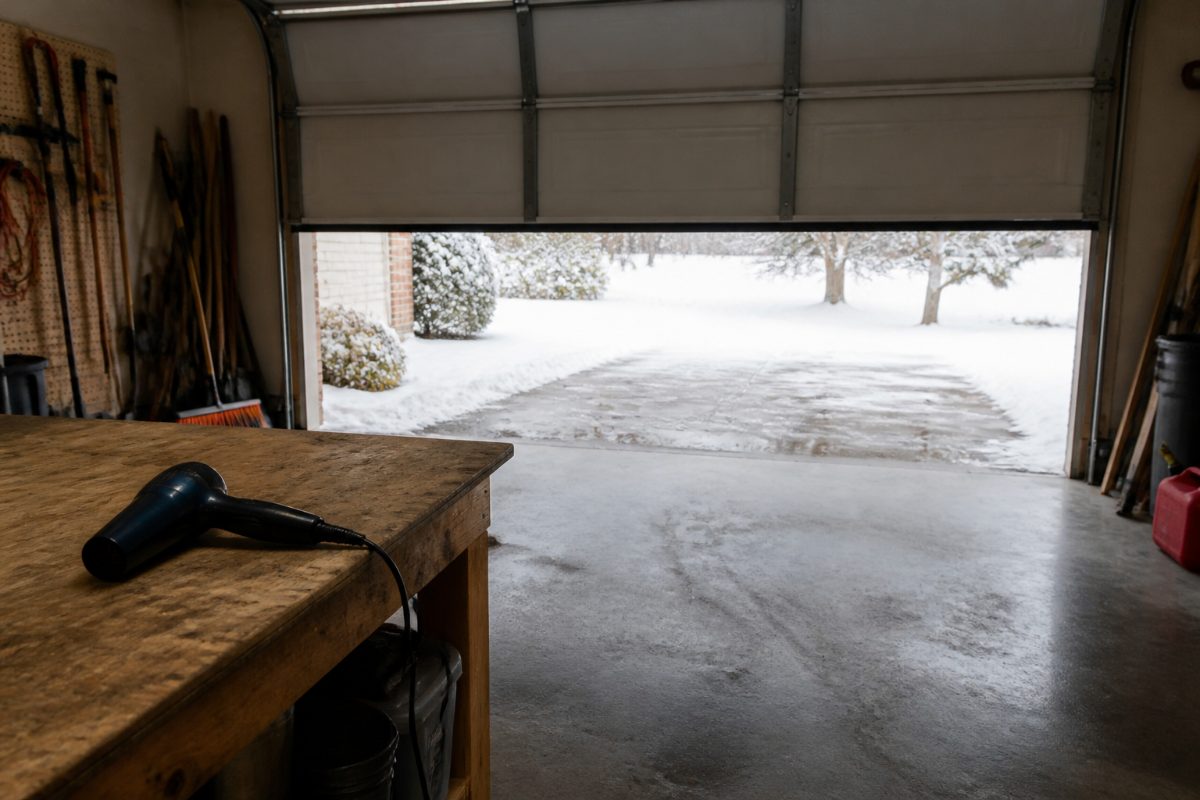
What to do if a garage door is frozen to the floor
If a garage door is frozen shut, stop the opener, identify where the door meets the floor, and thaw the ice gently before trying the door again. Repeatedly forcing an opener against a stuck seal can strain the system; a hair dryer on a low setting is one gentle way to warm the frozen area.
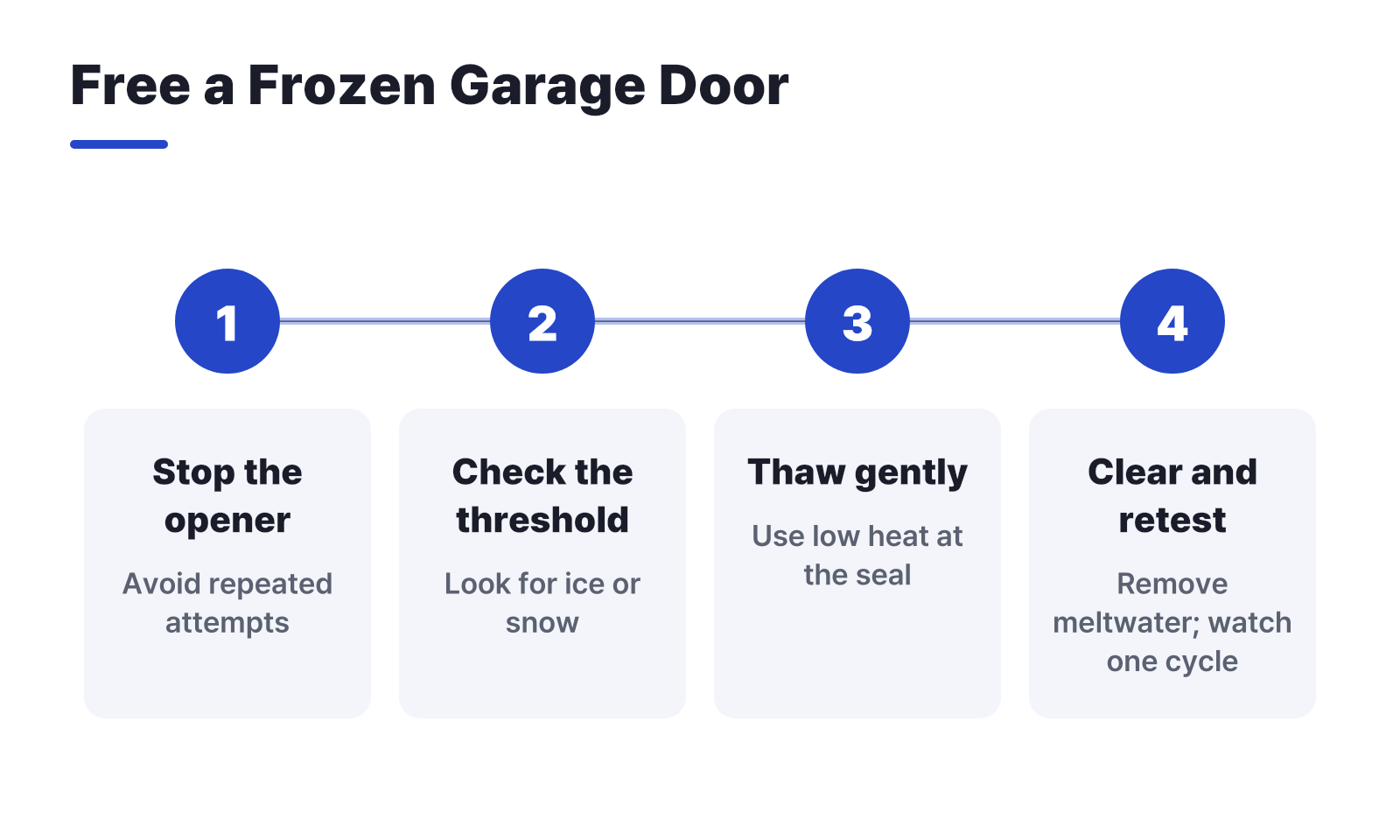
- Stop the opener as soon as the door does not move normally, strains, or reverses. Do not keep pressing the remote or wall control in the hope that the motor will break the ice free.
- Look along the bottom edge from inside the garage, if it is safe to do so. Check whether the seal is frozen to the floor, whether snow or ice is blocking the door’s path, or whether the visible problem appears away from the threshold.
- Clear loose snow and ice from in front of the door and around the bottom edge. Work only on material you can remove without prying against the door or its hardware.
- Warm the frozen seal area gently with a hair dryer on a low setting, moving the dryer steadily rather than holding heat in one spot. The aim is to release the ice at the floor contact, not to heat the door or seal aggressively.
- Pause and see whether the seal has released before trying the door again. If it remains attached, repeat gentle warming instead of using the opener to pull it loose.
- Once the door releases, clear away meltwater and remaining loose ice at the threshold. Leaving water in the same contact area gives it a chance to freeze again.
- After the door is free, watch one normal operating cycle. Stop if the opener strains or reverses, if the door feels unusually heavy, or if it drops quickly; these signs call for professional attention rather than further adjustment.
- Do not use rock salt casually around the door seal or metal hardware. Salt or ice melt can help melt ice in some conditions, but it can corrode metal parts and damage the bottom seal; if salt is used, clean the bottom section and seal thoroughly afterward.
A stuck door is not always frozen at the seal. If the bottom edge is clear but the door still will not move normally, or if the opener strains or reverses after the ice has been removed, stop and arrange a garage-door inspection. Springs and cables are under tension, so do not try to adjust them as part of thawing.
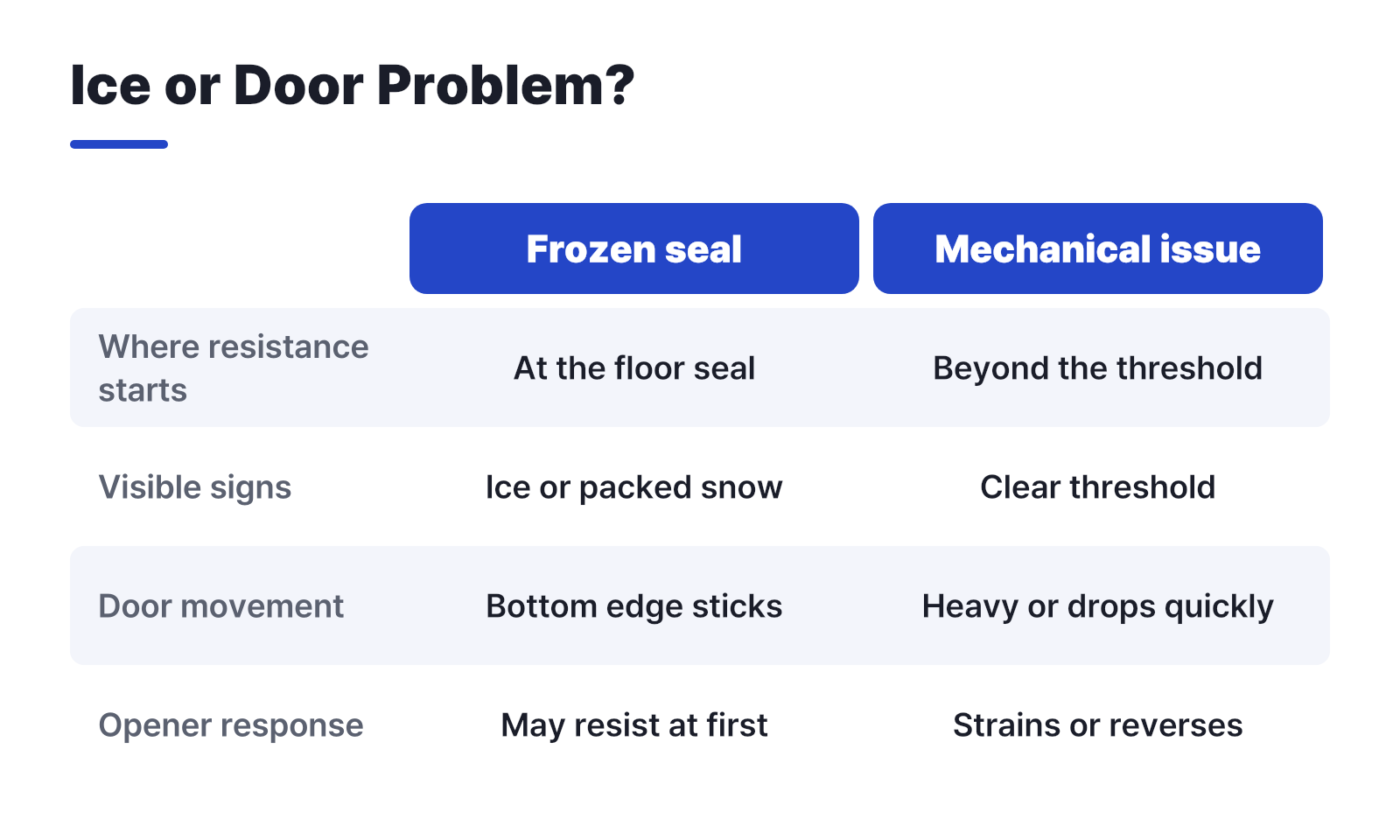
How to tell whether ice or a door problem is stopping it
A door frozen to the floor usually shows resistance at the bottom seal, where ice or packed snow is visible. A mechanical problem is more likely when the threshold is clear but the door still moves poorly, feels unusually heavy, drops quickly, or makes the opener strain or reverse. Use those observations to decide whether to thaw the seal or stop and seek service.
- Look for ice or packed snow directly beneath the bottom seal. If the obstruction is visibly at the floor contact, clear loose material and use gentle heat at that spot before testing the door.
- Notice where resistance begins. Resistance as the bottom edge starts to lift can fit a frozen seal; resistance that continues after the seal is free points to a problem that should not be treated as a simple ice bond.
- Pay attention to the opener’s response. Straining or reversing is a stop signal, not an invitation to increase force or repeat the cycle.
- Observe the door’s balance only through normal operation and without disconnecting or adjusting components. If the door feels heavy or drops quickly, stop and have it checked.
- Look at visible cables from a safe distance. Fraying, rust, or uneven winding should be left for a professional; do not touch, wind, or reposition a cable.
- Separate a seal issue from a door-system issue before applying more product. Lubricant may help a sticking seal or moving part when used as directed, but it cannot correct a damaged seal, cable concern, or door that is out of balance.
- Write down what you observed: where the resistance occurs, whether ice was present, and whether the opener strained or reversed. Those details make it easier to describe the problem when arranging service.
Use this maintenance checklist before the first freeze, after snow or freezing rain, and when a door begins to stick. If the seal is visibly damaged, the opener strains or reverses, the door feels heavy, or a cable looks worn, leave the door stopped and arrange an inspection rather than forcing it through another cycle.
Quick winter checklist
Run through this short checklist when preparing the garage door for winter or after snow collects at the threshold. Each item targets either water at the floor contact or movement in the door system, so you can act on the cause you can actually see.
- Clear debris from the threshold and the floor beneath the door.
- Inspect the bottom seal for tears, gaps, stiffness, and uneven floor contact.
- Replace a worn seal before freezing conditions set in.
- Remove snow and ice from the door’s path and keep the threshold dry.
- Use silicone lubricant on the seal and cold-rated lubricant on specified moving parts, following product directions.
- Stop the opener if it strains, reverses, or meets unusual resistance.
- Thaw a visibly frozen seal gently; do not force the door upward.
- Arrange professional service for a heavy or fast-dropping door, visible cable damage, or resistance that remains after the ice is gone.
Start with a visual check of the bottom seal and threshold before the next freeze. If you find damage or the door does not move normally after the ice is cleared, leave it stopped and have the door inspected.
References
- Protecting Your Garage Door From Temperature Extremes: 7 Essential Tips
- Preventing & Thawing Frozen Pipes | American Red Cross
- Frozen Garage Door? (6 Safe Ways To Thaw It This Winter)
Information in this post was checked as of November 2026. Policies and prices may change, so please verify important details with official sources.


Comments
Post a Comment