How to Test a Sump Pump Before Winter Storms
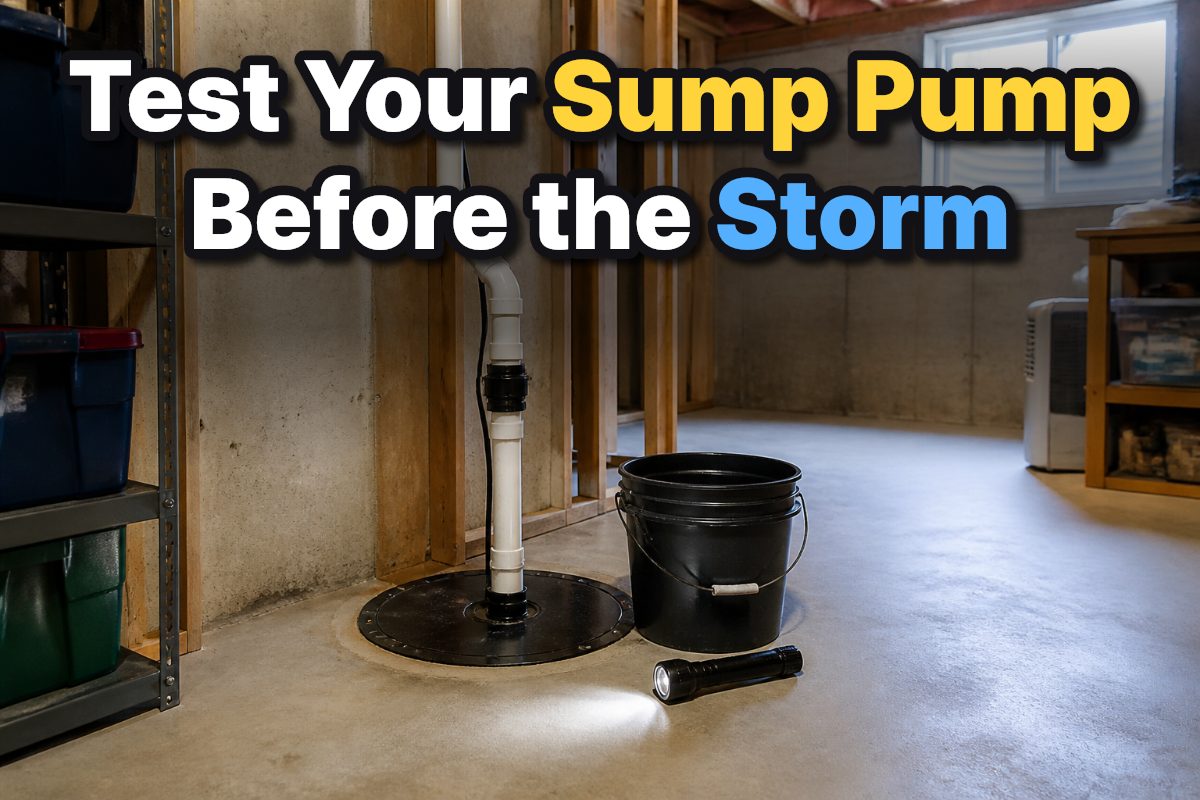
Table of Contents
To test a sump pump before winter storms, check that the pump is plugged in, inspect the pit and outdoor discharge outlet, then add water until the float switch starts the pump. Watch the water drain, listen for smooth operation, and confirm that the pump turns on and off through at least two cycles.
A sump pump test can reveal a stuck float, debris in the pit, or a blocked discharge before snowmelt or storm water reaches the basement. Work from dry, stable footing around the exterior, and stop if you find an electrical problem, a suspected frozen pipe, or a pump that will not run properly.
What to check before testing a sump pump
Before adding water, make sure the sump pump is plugged in, the pit is accessible, and the visible outdoor discharge outlet is open. Those checks help you distinguish a pump problem from a power or drainage problem, and they let you spot debris before it interferes with the float or pump.
A sump pit is the basin that collects water for the pump. If the pit has a lid, remove it carefully and use a flashlight to look inside. Check for material that could plug the pump, but do not reach into standing water or handle wiring. If clearing the pit would require you to reach into water or move electrical components, stop and arrange qualified help.
Look at the pump cord and plug from a dry position. Confirm that the plug is seated in its outlet. If you see damaged wiring, standing water around electrical equipment, or an outlet that appears unsafe, do not continue the test. A pump that cannot receive power cannot respond to rising water, and repeatedly manipulating an electrical connection around water can add risk without identifying the underlying fault.
Notice the float before you pour anything into the pit. The float is the part that rises with the water and signals the pump to start; as the water level falls, it should lower and allow the pump to stop. Check that it is not visibly trapped against the pit wall, lid, or other objects. Do not force it past an obstruction.
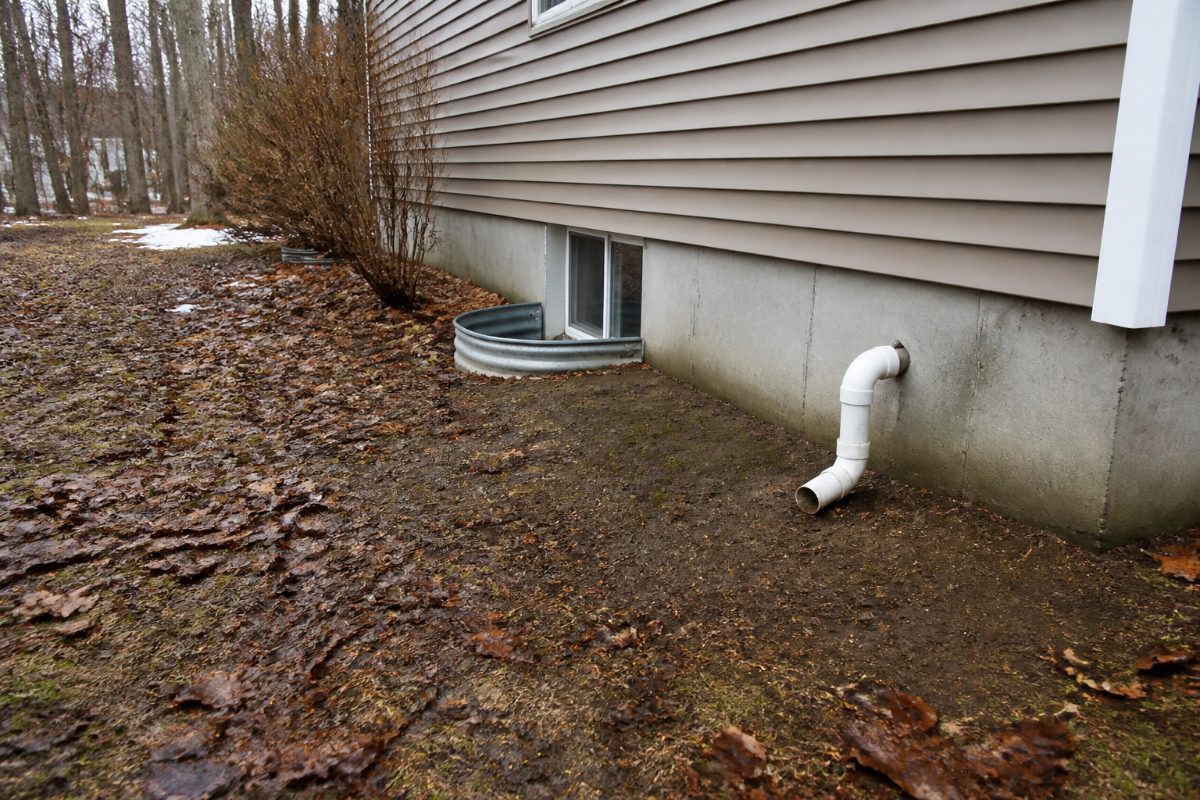
From outside, locate where the discharge pipe releases water. Confirm that the outlet is visible and not covered by leaves, snow, ice, or other debris. The pipe should direct water away from the house; water that collects near the foundation can work against the goal of moving it away from the basement.
How to test a sump pump with water
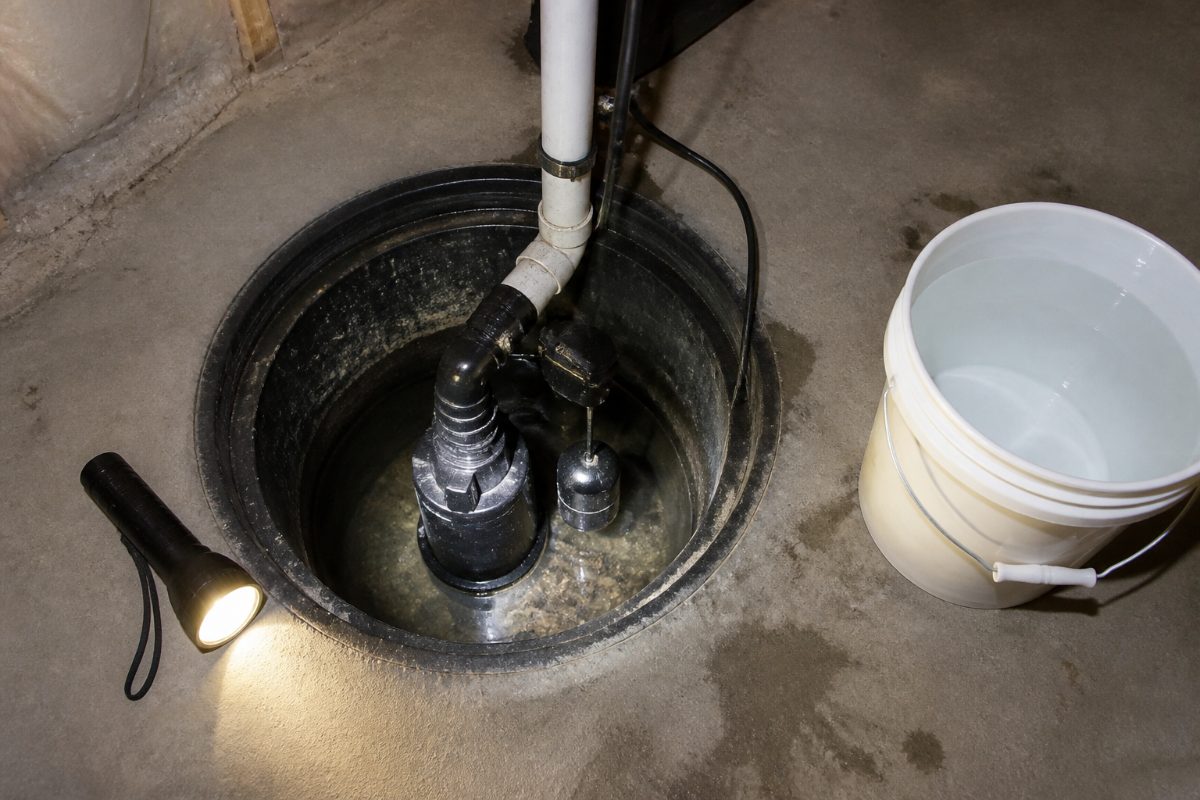
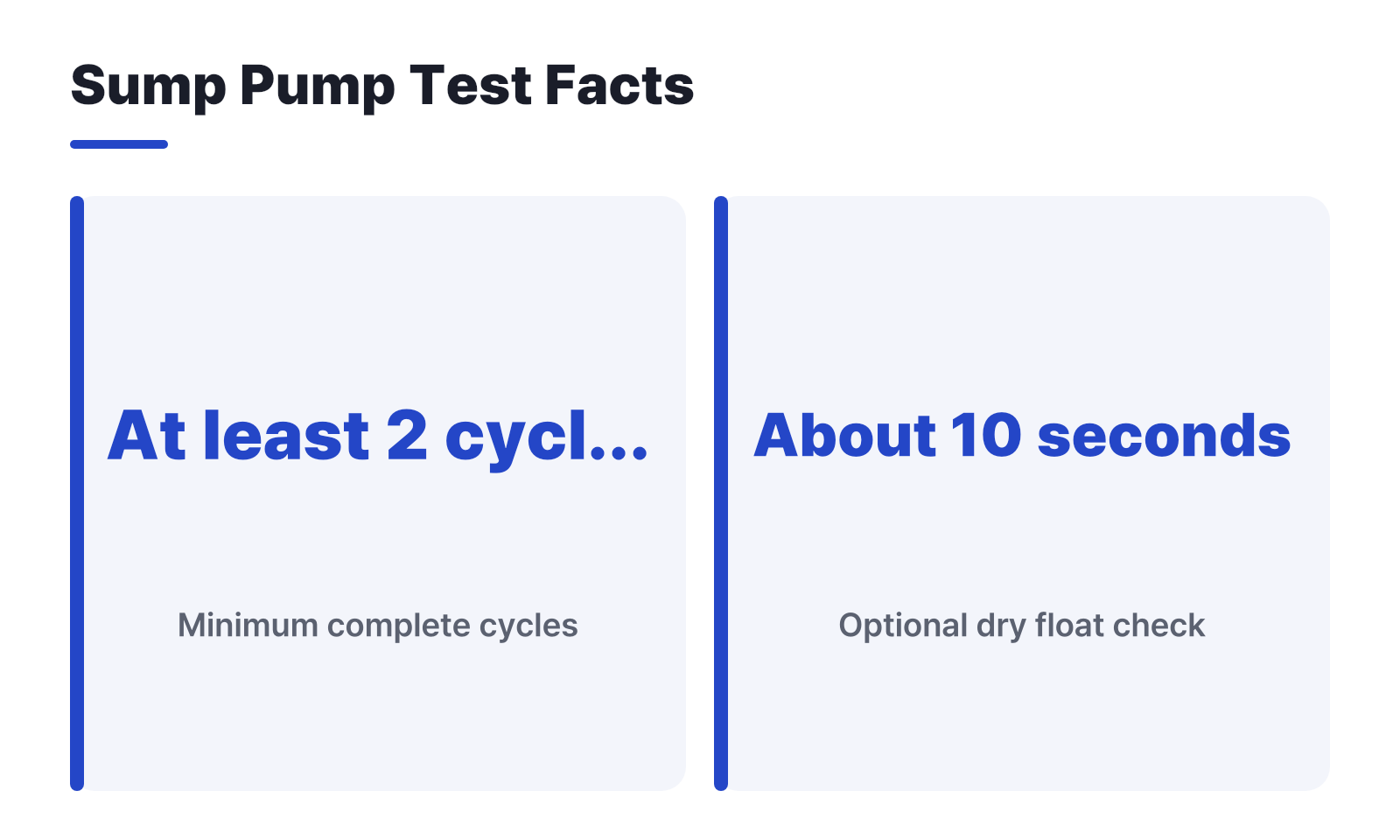
The most useful homeowner test is to add water to the pit and watch the pump complete a cycle. Pour water in gradually until the rising level lifts the float and starts the pump; then watch the water fall and the float lower. North Dakota State University Extension recommends confirming that the pump turns on and off at least twice.
Make sure the pit is clear enough for the float and pump to move freely, and confirm that the pump is plugged in. Keep your hands away from standing water and electrical parts.
Pour water into the sump pit in a controlled way. Keep adding water until the float rises and the pump starts. If the pit already contains water, do not add more than needed to trigger the float.
Watch the pump and float while the water drains. The pump should run as the water level falls, and the float should move down as the pit empties.
Repeat the cycle until the pump has turned on and off at least twice. The repeated cycle helps you see whether the float responds consistently, rather than relying on a single start.
Listen while the pump runs and observe the discharge outlet. Note whether the pump sounds smooth and whether water leaves through the visible outlet instead of backing up in the pit.
Pouring water gradually makes it easier to see the float’s response. NDSU recommends simulating the speed at which water normally enters the sump, so a controlled pour is more useful than dumping in water so quickly that you cannot follow the level and switch action.
If the pit is dry, there is another way to check whether the pump responds: NDSU says you can lift the float for about 10 seconds, then lower it slowly. A brief dry run will not damage the pump, but a water test gives you the added chance to observe drainage through the discharge line.
Let the pump finish its cycle before starting another. Watch the float rather than trying to guess when the pump should start or stop. The useful result is a clear sequence: the water rises, the float activates the pump, the water drains, and the float returns low enough for the pump to stop.
How to check the discharge line before a freeze
A sump pump can run while water still fails to leave the property if its discharge route is blocked. From dry, stable ground, inspect the visible outlet for leaves, snow, ice, or debris, and check whether discharged water has been pooling close to the foundation.
Follow the exterior portion of the line as far as you can see it without digging, taking apart pipes, or stepping onto icy ground. Confirm that the outlet is open and points away from the house. Pay attention to areas near basement doors, garage approaches, and window wells, where pooled water could collect close to an opening.
Do not assume that hearing the pump means the discharge route is working. During the water test, compare what you see at the pit with what happens outside: the water level should fall in the pit, and water should emerge at the visible outlet. If the pump runs but water does not appear there, or the line appears blocked by ice, stop troubleshooting at the visible inspection.
Do not use a blowtorch, propane heater, or open flame to thaw a frozen PVC discharge pipe. Frozen or obstructed piping can need plumbing work, and applying open flame can damage the pipe and create hazardous fumes. Leave suspected ice blockages, underground lines, and pipe disassembly to a qualified plumber.
Keep the rest of the exterior drainage route in view as well. Clear, well-directed downspouts help move roof water away from the foundation, rather than adding to the water the sump area must handle. For a separate seasonal task, see how to clean gutters before winter.
How to test a backup pump and recognize trouble
If your sump system has an electric backup pump, test it by the same basic method: add water until its float activates it, then watch it run and drain. A backup pump matters during a power interruption only if it is ready to operate, so include it in the test rather than checking only the primary pump.
Keep the backup test focused on what you can observe: whether the pump starts, whether the float moves freely, whether water drains through the discharge route, and whether the pump stops as the level falls. If your system has a battery backup, follow the equipment’s own operating instructions for checking the battery and backup function. Do not guess at battery connections or attempt electrical repairs.
Several test results call for follow-up rather than more repeated testing. If the float is sluggish, the pump fails to start, or the pump makes a sound like gravel while running, the pump or float may need service or replacement. A pump that runs without lowering the water, or a visible outlet that remains blocked, also needs attention before you rely on the system during a storm.
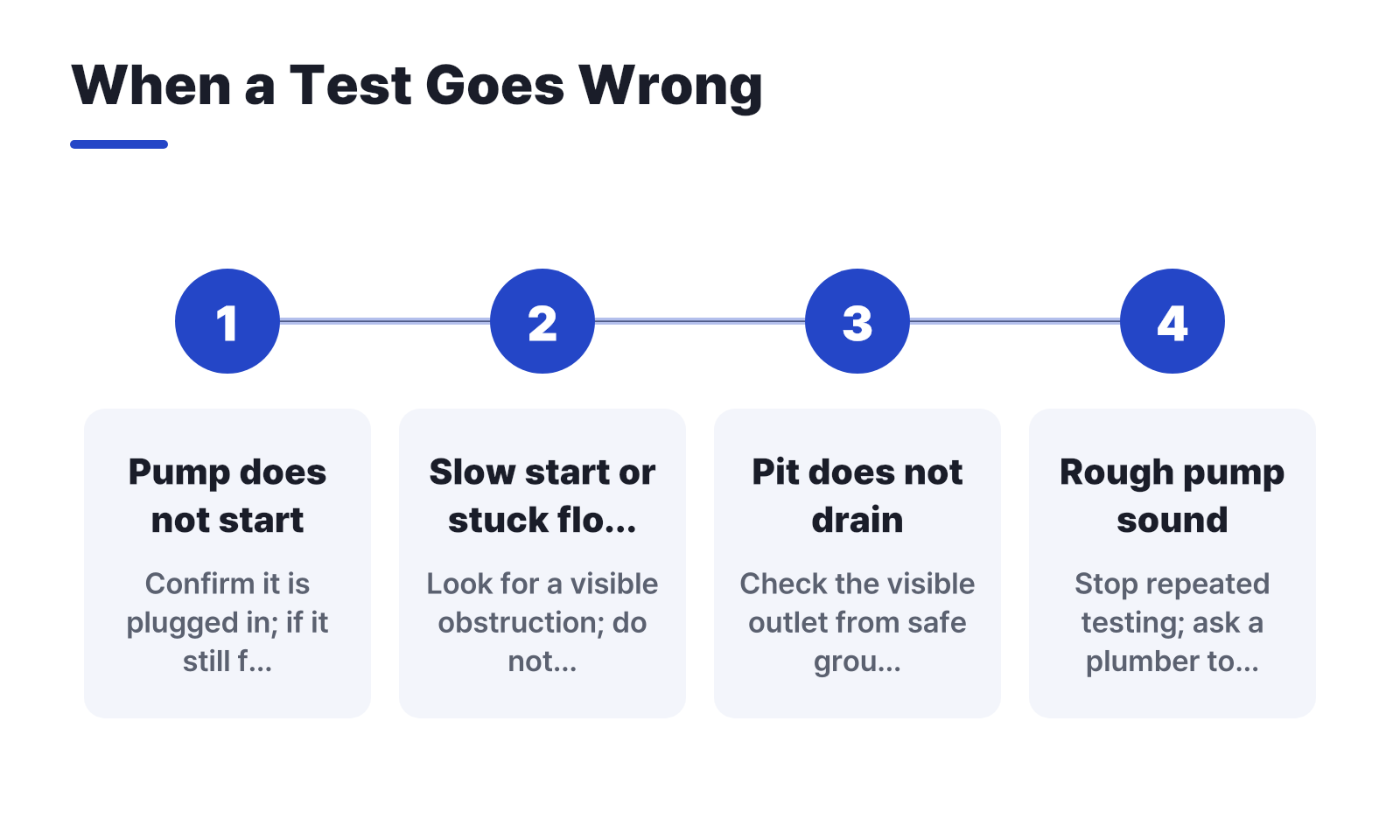
Use this order when the test does not go as expected:
The pump does not start: Confirm from a dry position that it is plugged in. Check whether the float can move freely without forcing it. If the pump still does not start, stop the test and contact a licensed plumber.
The pump starts slowly or the float sticks: Look for a visible obstruction in the pit. Do not reach into standing water or adjust wiring. A sluggish float can keep the pump from responding as the water level rises.
The pump runs but the pit does not drain: Look at the visible discharge outlet from safe ground. A blockage or suspected frozen section needs qualified plumbing attention, not a flame or an improvised pipe repair.
The pump sounds rough: Stop relying on repeated test cycles to solve the problem. A gravel-like sound can indicate a pump issue, and a plumber can assess whether the pump or float needs service.
For an outlet or wiring concern, do not keep plugging and unplugging equipment or make repairs beside water. The test is meant to reveal whether the system responds, not to turn a homeowner check into electrical work.
When to stop the test and get help
Stop a sump pump test if water is near electrical equipment, wiring looks damaged, the pump will not start after you confirm it is plugged in, or the discharge line appears frozen or blocked beyond the visible outlet. Those conditions call for qualified help because further handling can involve electrical or plumbing work.
A test that completes two cycles is useful evidence that the float and pump respond under the conditions you tested. It does not remove the need to keep the discharge outlet open or ensure that the pump has power when a storm arrives. Make a note of any rough sound, slow float movement, or poor drainage so you can describe the exact symptom when arranging service.
If you rent, notify the property manager or landlord when the pump fails, the outlet is blocked, or a pipe problem needs repair. Do not take apart shared or installed plumbing. You can still report what you observed: whether the pump started, whether water drained, and where the visible discharge outlet is located.
Schedule the test before a winter storm is imminent, while you can inspect the exterior from safe footing and arrange repairs if needed. Start with the plug, pit, and visible outlet, then run the water test and include any electric backup pump. If a test reveals a failure or a possible freeze blockage, leave the system off-limits for DIY repair and contact a qualified plumber.
References
- Sump Pump Battery Backup: What You Need Before Winter - Fullriver Battery Blog
- Sump Pump Discharge Winter Checks and Troubleshooting
- Sump Pumps | NDSU Agriculture
- A Homeowner's Guide to Drainage Problems and Solutions
- Sump Pump Systems: Practical Information and Tips for Inspections - American Society of Home Inspectors, Inc.
Information in this post was checked as of November 2026. Policies and prices may change, so please verify important details with official sources.


Comments
Post a Comment